


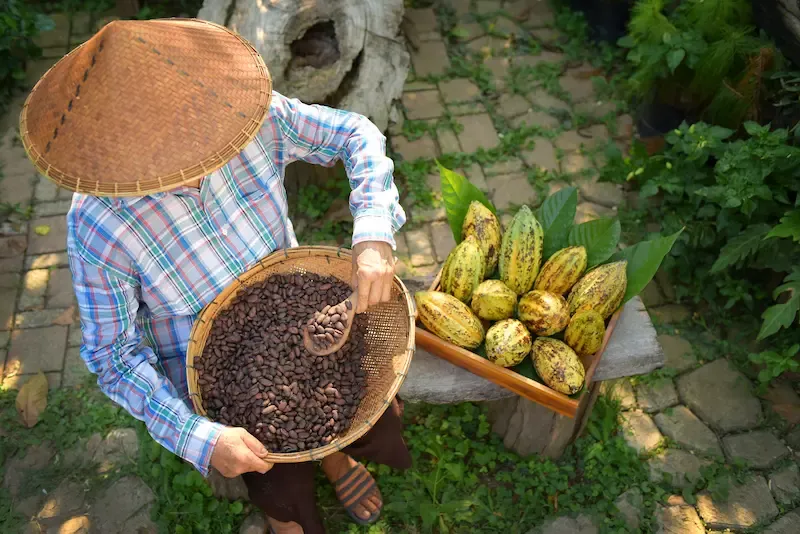
In the cacao value chain, processing facilities play a decisive role in shaping flavor, quality, and the commercial value of the final product. Therefore, designing and constructing a facility that meets the proper standards is essential for cooperatives to grow sustainably, expand production, and meet both domestic and international market requirements.
1. Location and Overall Layout
The facility location must ensure:
-
Convenient transportation, close to raw material areas to reduce transport time.
-
Distance from pollution sources (livestock farms, chemical factories, landfills, etc.).
-
A good drainage system, preventing flooding during the rainy season.
The layout of the processing facility should follow a one-way workflow:
Raw material reception → Fermentation → Drying → Roasting → Grinding → Finished products
This minimizes cross-contamination, avoids workflow overlap, and improves production efficiency.
2. Facility Design Standards (HACCP/GMP)
A cacao processing facility must comply with food safety standards such as HACCP, GMP, ISO 22000, including:
-
Walls, ceilings, and floors made of easy-to-clean, non-cracking, moisture-resistant materials.
-
Doors and windows equipped with insect-proof screens and tight-seal mechanisms.
-
Adequate lighting (minimum 300 lux in processing areas).
-
Natural or mechanical ventilation to maintain temperature stability and prevent mold.
-
A dedicated area for finished products, separated from raw materials to reduce contamination risks.
3. Environmental and Sanitation Systems
The facility must include complete systems to ensure hygiene and environmental safety:
-
Wastewater treatment systems meeting environmental regulations.
-
Lidded waste bins with clear separation of organic and inorganic waste.
-
Closed floor drainage systems to prevent pest intrusion.
-
Separate hygiene and protective clothing areas for workers.
Maintaining cleanliness helps prevent odor absorption and preserves the cacao’s natural flavor profile.
4. Equipment and Processing Line Standards
The processing line should be organized scientifically and meet the following principles:
-
Equipment made from 304 stainless steel or food-contact-safe materials.
-
Fermentation boxes, drying machines, roasters, grinders… installed in logical workflow order.
-
Temperature and humidity control systems for critical steps: fermentation, drying, and storage.
-
Separate raw material and finished goods warehouses, with pallets to prevent moisture exposure.
5. Occupational Safety and Fire Protection (PCCC)
A cacao processing facility must fully comply with fire prevention and safety regulations:
-
Equipped with fire extinguishers, fire cabinets, automatic fire alarm systems.
-
Clear emergency exits with illuminated signage.
-
Underground wiring and independent electrical cabinets to reduce fire risks from roasting or drying equipment.
-
Regular worker training on equipment safety and fire prevention.
6. Sustainability and Energy Efficiency
Modern facility design prioritizes green and sustainable practices:
-
Using solar energy for heating or lighting systems.
-
Reusing cacao pod husks for organic fertilizer.
-
Optimizing natural ventilation to reduce electricity usage.
-
Using insulated building materials to maintain stable indoor temperatures.
These measures not only help cooperatives reduce costs but also enhance their appeal to international buyers.
A well-designed cacao processing facility improves product quality and provides a foundation for cooperatives to scale up, achieve international certifications, and enhance export potential. Proper construction from the start is the key to elevating Vietnamese cacao products in the global market.


Leave a Reply
You must be logged in to post a comment.