


Chocolate production is a complex process that combines agriculture, food processing technology, and culinary craftsmanship. From raw cocoa beans harvested in tropical regions to the rich and flavorful chocolate bars enjoyed by consumers, each stage plays an essential role in developing the final product’s taste and quality.
1. Main Raw Material of Chocolate
Chocolate is produced from the beans of the cacao tree, scientifically known as Theobroma cacao. Cacao trees grow mainly in tropical regions with warm and humid climates such as Africa, South America, and Southeast Asia.
After harvesting, cocoa beans must undergo several initial treatments to develop their characteristic flavor. The quality of cocoa beans—including the variety, climate conditions, and fermentation process—directly affects the quality of the final chocolate product.
2. Main Steps in the Chocolate Production Process
Harvesting and Bean Extraction
Ripe cacao pods are harvested by hand to avoid damaging the tree. The pods are then opened to extract the beans, which are surrounded by a sweet white pulp.
Fermentation
The cocoa beans are fermented in wooden boxes or covered with banana leaves for about 5–7 days. This step is extremely important because it:
-
Reduces the natural bitterness of cocoa
-
Develops the characteristic chocolate aroma
-
Changes the chemical structure of the beans
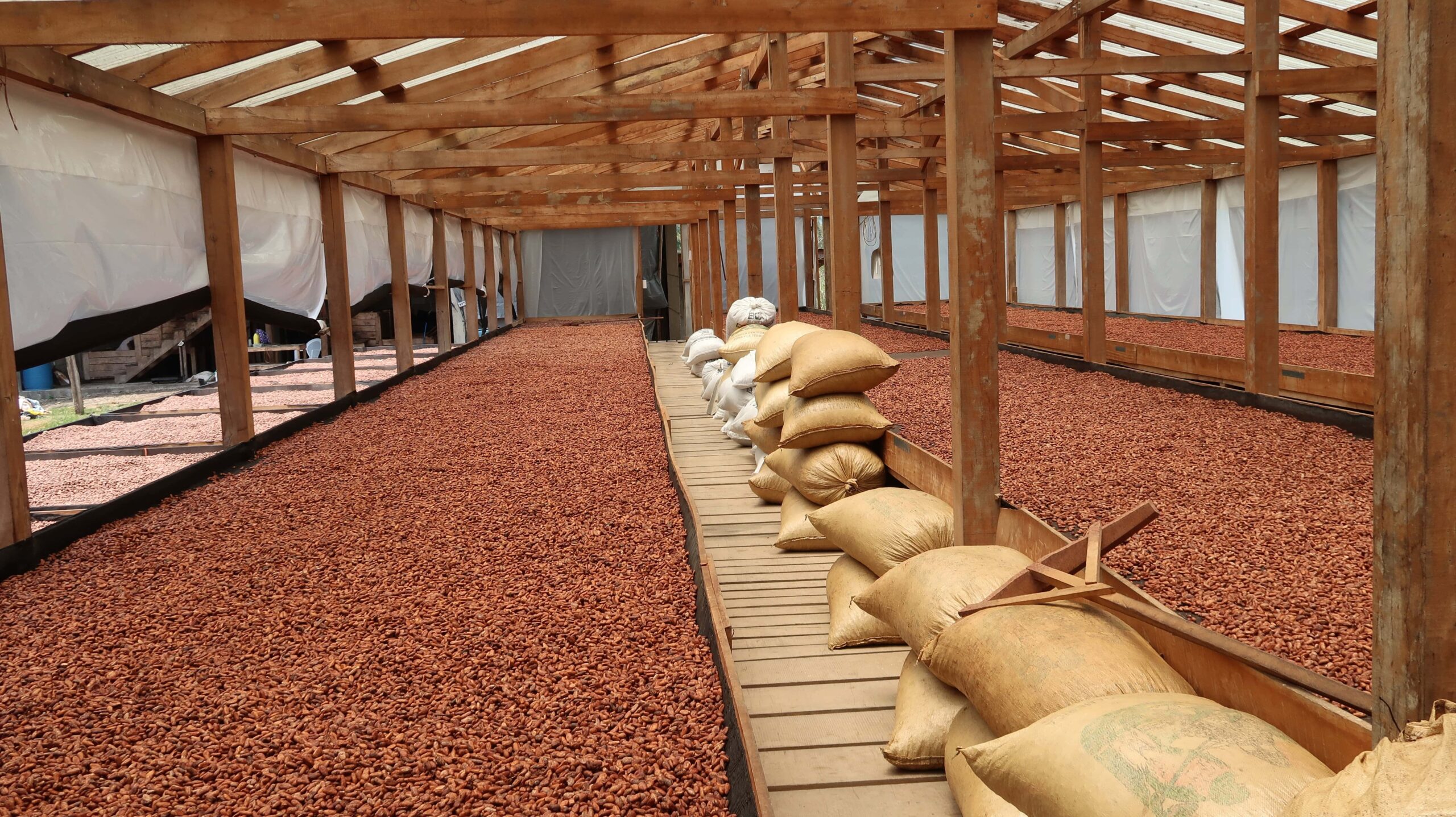
Drying
After fermentation, the cocoa beans are sun-dried or mechanically dried until the moisture content is reduced to around 6–7%. This helps preserve the beans before they are transported to processing facilities.
3. Processing Cocoa Beans into Chocolate
Roasting
Dried cocoa beans are roasted at temperatures of approximately 120–150°C. Roasting helps to:
-
Enhance aroma and flavor
-
Make the beans more brittle
-
Facilitate shell removal
Grinding
After roasting and removing the shells, the cocoa nibs are ground into cocoa liquor, a thick liquid made entirely from cocoa solids and cocoa butter. From this stage, it is possible to separate:
-
Cocoa butter
-
Cocoa powder
Mixing Ingredients
To produce chocolate, cocoa liquor is blended with other ingredients such as:
-
Sugar
-
Cocoa butter
-
Milk (for milk chocolate)
-
Natural flavorings such as vanilla
The mixing ratio determines the type of chocolate produced, such as dark chocolate, milk chocolate, or white chocolate.
Conching
The chocolate mixture is continuously mixed and refined in a conching machine for several hours or even days. This process helps to:
-
Improve smoothness and texture
-
Reduce acidity
-
Enhance the chocolate’s overall flavor
Tempering
Chocolate is carefully cooled and reheated in controlled cycles to stabilize the cocoa butter crystals. This process ensures that the chocolate has:
-
A glossy appearance
-
A crisp snap when broken
-
Better resistance to melting
4. Molding and Packaging
After tempering, the chocolate is poured into molds to create different shapes such as:
-
Chocolate bars
-
Chocolate pieces
-
Chocolate with nuts or cream fillings
Finally, the products are cooled, packaged, and distributed to the market.
Chocolate production is a sophisticated process that begins with the cultivation and treatment of cocoa beans and continues through advanced processing techniques in factories. Each stage contributes to the rich flavor, smooth texture, and irresistible appeal of chocolate—one of the most beloved foods in the world.


Leave a Reply
You must be logged in to post a comment.