


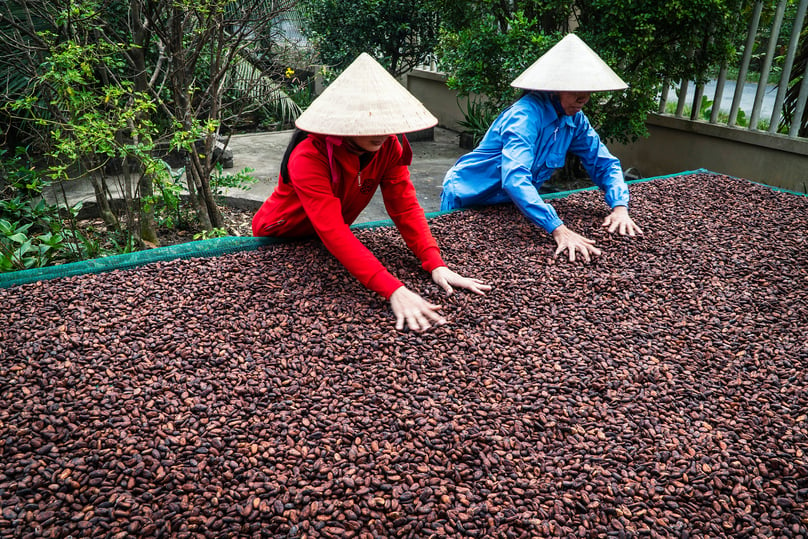
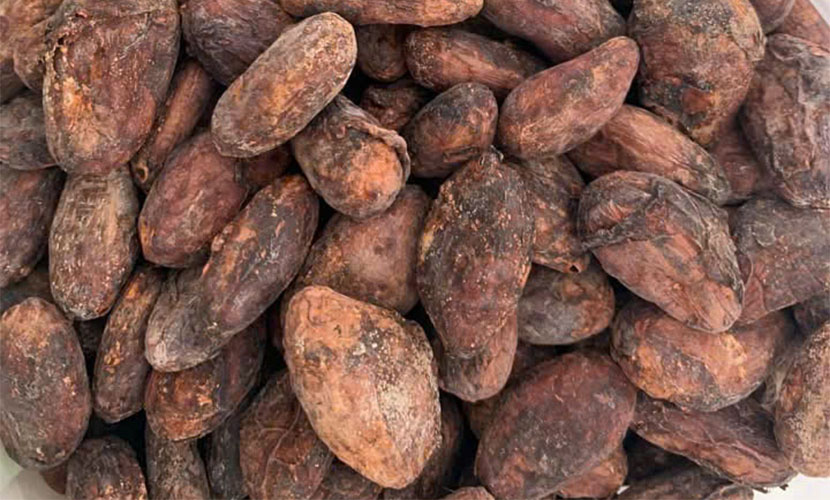
Dried cocoa beans – the main ingredient in the food manufacturing industry – are increasingly asserting their position in the international market. In Vietnam, especially in provinces such as Ben Tre, Dak Lak, Dong Nai or Lam Dong, cocoa trees are increasingly grown and produce high-quality products, serving the growing export demand.
Process of producing dried cocoa beans that meet export standards
To obtain high-quality dried cocoa beans, farmers and processing enterprises must follow a strict process from harvesting, fermenting to drying:
- Harvesting at the right time: Red ripe cocoa beans are harvested when they reach maximum sweetness, helping to create a delicious, rich flavor for the beans.
- Natural fermentation for 5-7 days: This is an important step that determines the quality and flavor of the beans. The beans are stirred evenly and incubated in wooden barrels to ensure the fermentation process is effective.
- Drying or drying: After fermentation, the beans are dried in the sun or dried by machine to reach the standard humidity (below 7%), ensuring no mold and long-term preservation.
Quality standards for export
Exported dried cocoa beans must meet strict standards of the world market such as:
- No impurities, no mold.
- High cocoa butter content (over 50%).
- Characteristic flavor: Vietnamese cocoa stands out with a light fruity flavor, attractive sour aftertaste.
- International certifications: such as UTZ, Rainforest Alliance, Organic, Fairtrade, etc.
Potential export markets
Vietnam’s dry cocoa beans are currently exported to many countries such as:
- Japan, South Korea: strict requirements on cleanliness and traceability.
- Europe (Germany, France, Belgium): large chocolate consumption market, preferring well-fermented cocoa with a light taste.
- United States: interested in organic cocoa and fair trade certification.
Opportunities and challenges
Vietnam has a great advantage as global consumers gradually shift to preferring high-quality cocoa products with sustainable origins. However, to develop the export market more strongly, the cocoa industry needs to:
- Invest more in deep processing (cocoa nibs, cocoa powder, cocoa butter).
- Build a raw material area with clear traceability.
- Ensure consistent quality between shipments.


Leave a Reply
You must be logged in to post a comment.